

Returning to the Soil
Rachel Dias on regeneration, listening to the land, and finding her way back to herself.

I write this from behind my house in Northern California, overlooking our small town, surrounded on all sides by continuous rolling hills, much like the one I’m sitting on.
Spring has officially arrived here, and with it comes immeasurable beauty – bursting cherry blossom trees, green grass that is quickly shooting up, eucalyptus trees standing tall and creaking in the wind. Two turkey vultures with wide wing spans chase each other through the sky. A week ago I caught a lucky glimpse of a bobcat on a trail right behind me, stoically looking out over the ridge and making brief eye contact. A calm, steady presence.
I touch my bare feet to the Earth every day during this season - taking in the perspective this hill grants me, breathing deep breaths of gratitude that I happen to be right here in this moment, watching the show unfold.
Today, I’m extra grateful to introduce our 12th earthlove guest, Rachel Gomes Dias. Rachel’s Substack posts resonate deeply - she’s a beautiful writer and clearly a thoughtful, creative human. Her path from the corporate world to olive groves (she’ll explain soon!) feels inspiring for anyone learning to listen to their heart and shape their life accordingly.
I have a feeling Rachel carries the kind of energy I’d love to be around if our paths ever cross. In the meantime, I’m thrilled to share her feature with you… enjoy.
MA: Let’s start off with the first question I ask every guest, how do you share your earthlove - your deep love of the earth?
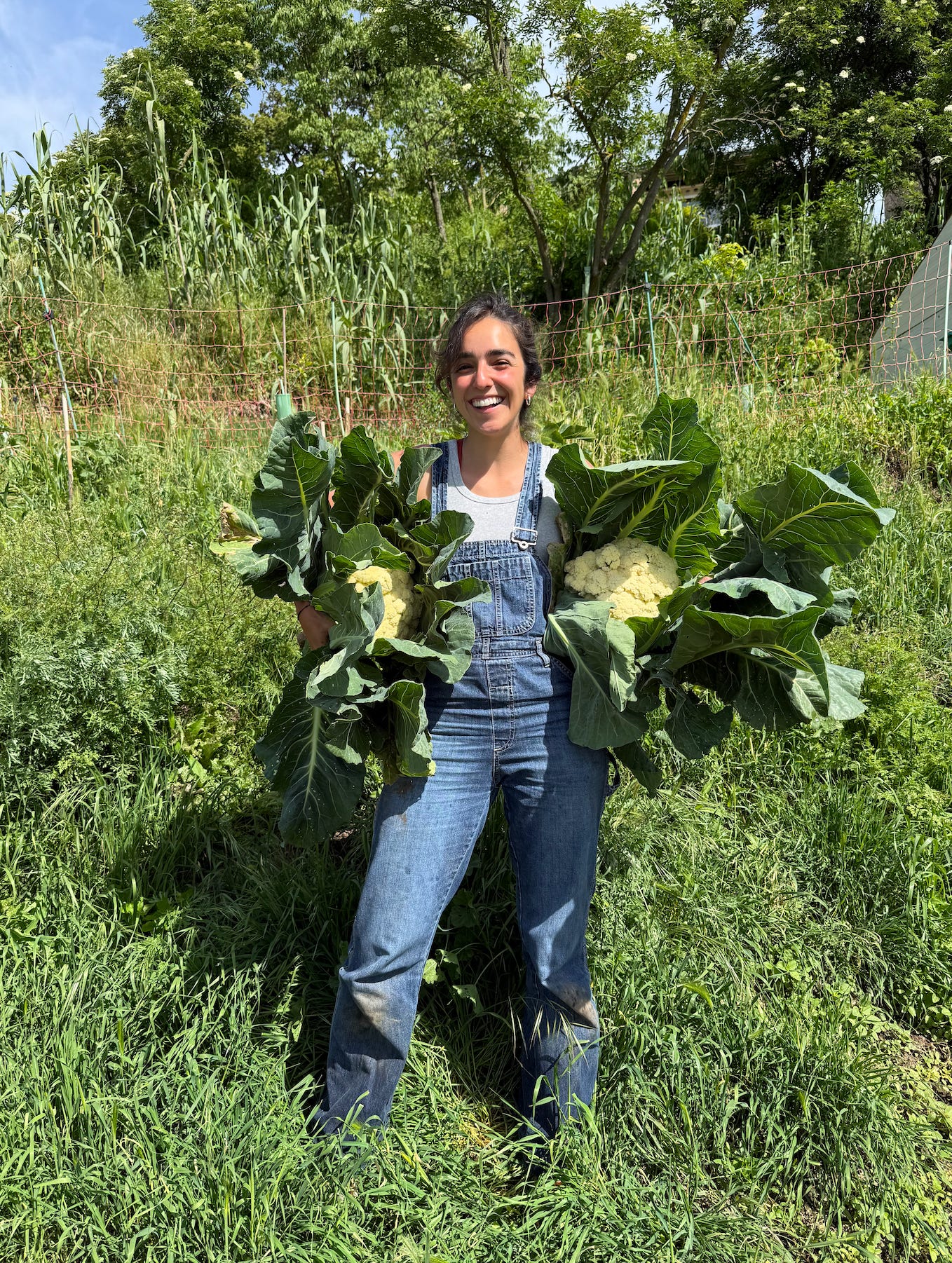
RD: My love for the earth has shaped my life path and continues to shape my daily actions. This deep exchange with the land has taught me how to take better care of myself and how to regenerate through small practices I learned while tending the soil: moving at a slower rhythm, paying attention to my breathing, nourishing myself with meals that grow organically, and so on.
By working on the land each day, I try to observe carefully how nature shifts through its seasons and everything that unfolds around me. It’s a daily practice of being more present and learning to understand what the land is trying to communicate.
Living in this ongoing practice of regeneration has expanded how I show up in relationships and how I move through life. For me, that is how I share my earthlove.
MA: Did you grow up around nature? What shaped your early relationship with the natural world?
RD: I was born and lived in Rio de Janeiro until I was 24. There, the summer storms are strong and leave the scent of wet soil in the air. I was always very aware of the nature around me in a deeply sensorial way. I was in constant exchange with it.
Growing up, I was always chasing a different hike with friends. We would climb mountains to see the city from above at sunrise. I had little rituals too: every year on my birthday I would visit the same waterfall, or I’d meet my best friend to watch the sunrise from the ocean before work. I made so many friends at the beach. Without even noticing, my entire lifestyle was shaped by the nature that surrounded me.
I only realized the impact of this upbringing when I moved to Madrid. I spent five years in a city where I felt completely disconnected from nature. On weekends I would sit in Retiro Park for hours just to feel some green around me. Being in the metro, going days without hearing birds, slowly became very difficult for me. It felt like something visceral had been taken away, almost a part of my personality.
The plot twist is that this absence made me deeply value something I had always taken for granted. That’s when I fully committed to working in regeneration, not only as a career path but as something deeply personal.
MA: At some point, you chose to step away from the corporate world and move closer to the soil. Can you walk us through that decision and share what the transition looked and felt like for you?
RD: After working for about five years at a large food company, the constant drive for growth embedded in its culture slowly stopped making sense to me. I no longer felt part of that movement, and something about it felt deeply wrong and disconnected from what I believed in: a vision of growth that is sustainable and intentional.
I realized I didn’t know where the food we were selling actually came from: where it was grown, by whom, or under what conditions. That realization pushed me to start reading more about sustainability, food systems, regenerative agriculture, and everything related to it.
Before I knew it, I was completely absorbed. I began using all of my vacation days to volunteer on farms and learn directly on the land. Little by little, I started imagining a way out - a path where this could become my career rather than just a hobby. Farming only on weekends was never going to be enough for me.
So I decided to take a leap. I started a master’s degree in agroecology and organic agriculture, traveling to another city for classes after work while still working full time. It was an intense and sometimes chaotic period, but I would do it all over again.
That transition expanded my worldview and opened doors to opportunities I am deeply grateful for. It truly felt like a “divisão de águas”, as we say in Portuguese - a turning point that divides life into a before and an after.
MA: Was there a moment when you knew there was no going back?
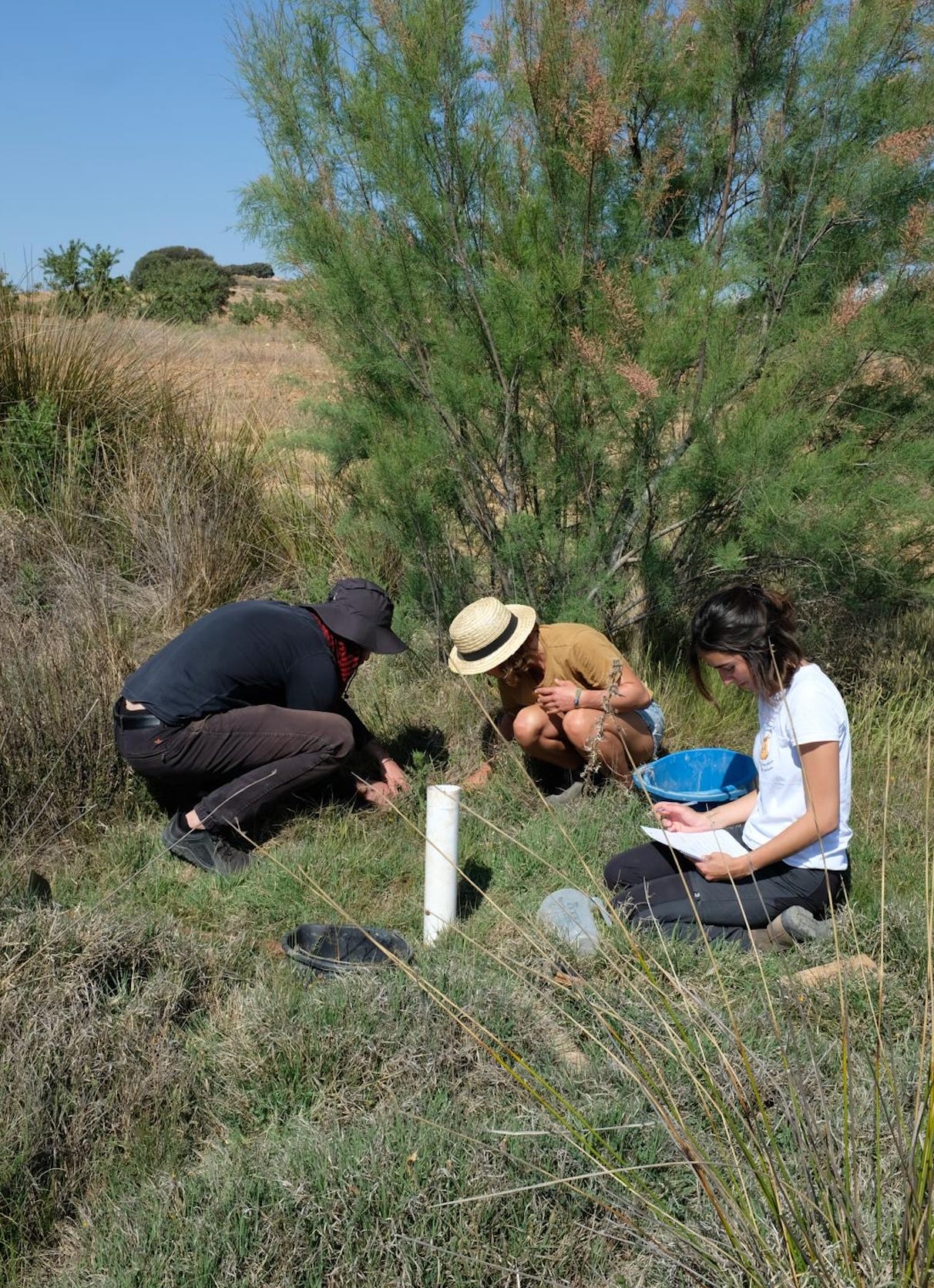
RD: At the beginning of 2024, I took part in an ecosystem restoration course at Camp Altiplano, a restoration project within La Junqueira farm in Murcia. That experience became the real turning point for me.
Completely removed from the busy routine waiting for me back in Madrid, I found myself immersed in nature, surrounded by like-minded people and closer to myself than I had felt in a long time.
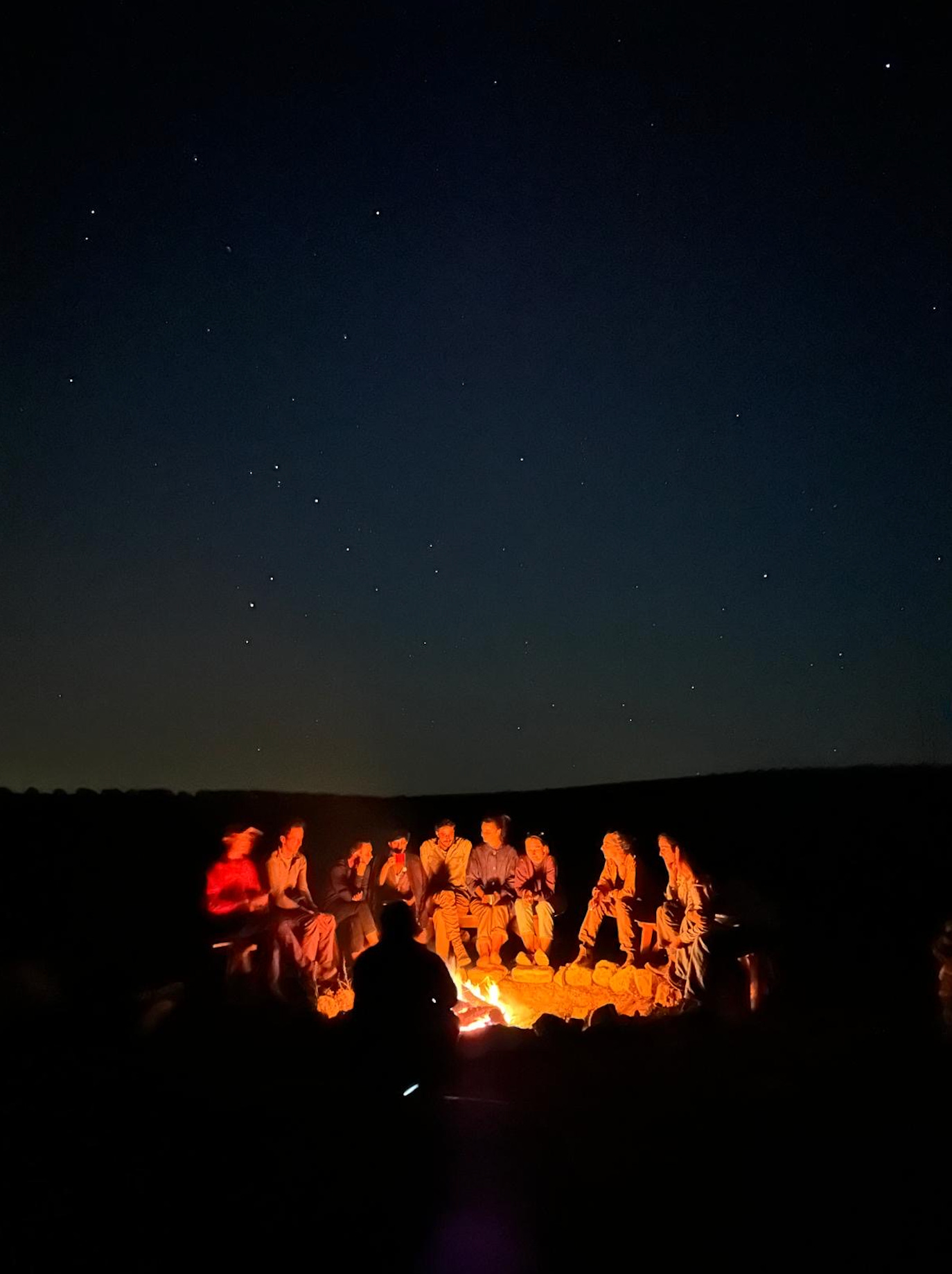
One evening, sitting under the stars around a fire, I had this quiet but powerful realization: I had found myself again after feeling lost for so long and I had found my tribe too.
I returned to Madrid knowing, with complete clarity, that this was my path. From that moment on, there was no going back.
MA: What sparked your interest specifically in farming and regenerative agriculture?
RD: My interest in farming and regenerative agriculture began as part of my search for a deeper connection with the land. I wanted to understand how I could participate in a movement that prioritizes caring for our soils and tending to the ecosystems around us, rather than simply extracting from them.
For me, regenerative agriculture feels like a clear and practical way to contribute to something bigger - a way of doing our small part in creating a healthier world for the generations that come after us.
MA: What does a typical day look like for you?
RD: I currently manage a 26-hectare farm, where I oversee crop production and help shape the long-term strategy alongside a team of passionate people working in regenerative farming. Sharing this work with others who care deeply about the land is a real joy, and I learn from them every day.
My days tend to flow with what the land and the team needs. Sometimes that means sitting at a desk crunching numbers in Excel or dealing with land management bureaucracy. Other days I spend the entire day outside, farming and caring for olive trees, a diverse orchard of fruit trees, and a beautiful vegetable garden.
It’s a rhythm that constantly shifts between planning and working with the soil, which keeps the work both grounded and dynamic.
MA: I consider community as essential as healthy food and sleep, maybe even more so. What have you learned about building community, especially when moving somewhere new?
RD: I’ve been living abroad for almost seven years now and have experienced many different ways of living. I’ve lived alone in an apartment, shared a farm with a community of more than fifteen people, and lived with families as well. Through these experiences I’ve seen many different interpretations of what “home” can look and feel like.
Sometimes feeling at home is less about the place itself and more about an internal sense of belonging. I’m grateful to come from a family where we are deeply connected, and it has also been beautiful to witness how others create their homes and communities. These experiences have expanded my worldview.
Living in community can also be challenging. I’ve learned how important it is to accept people as they are. It often requires confronting your own shadows and projections. Creating conscious spaces where people can share openly is essential - otherwise tensions can easily arise.
Wherever I live, feeling at peace at home is something I value deeply, so it becomes a practice.
When I move somewhere new, I usually start by engaging in activities that genuinely interest me. Friendships tend to form naturally from there. I don’t like forcing connections or trying to be everywhere. After living abroad for so long, I’ve also become very comfortable being alone and doing my own thing, which makes the process feel quite natural.
MA: I recently reread Alice in Wonderland and love the White Queen’s line: “Why, sometimes I’ve believed as many as six impossible things before breakfast.” What’s something many would call impossible that you choose to believe anyway?
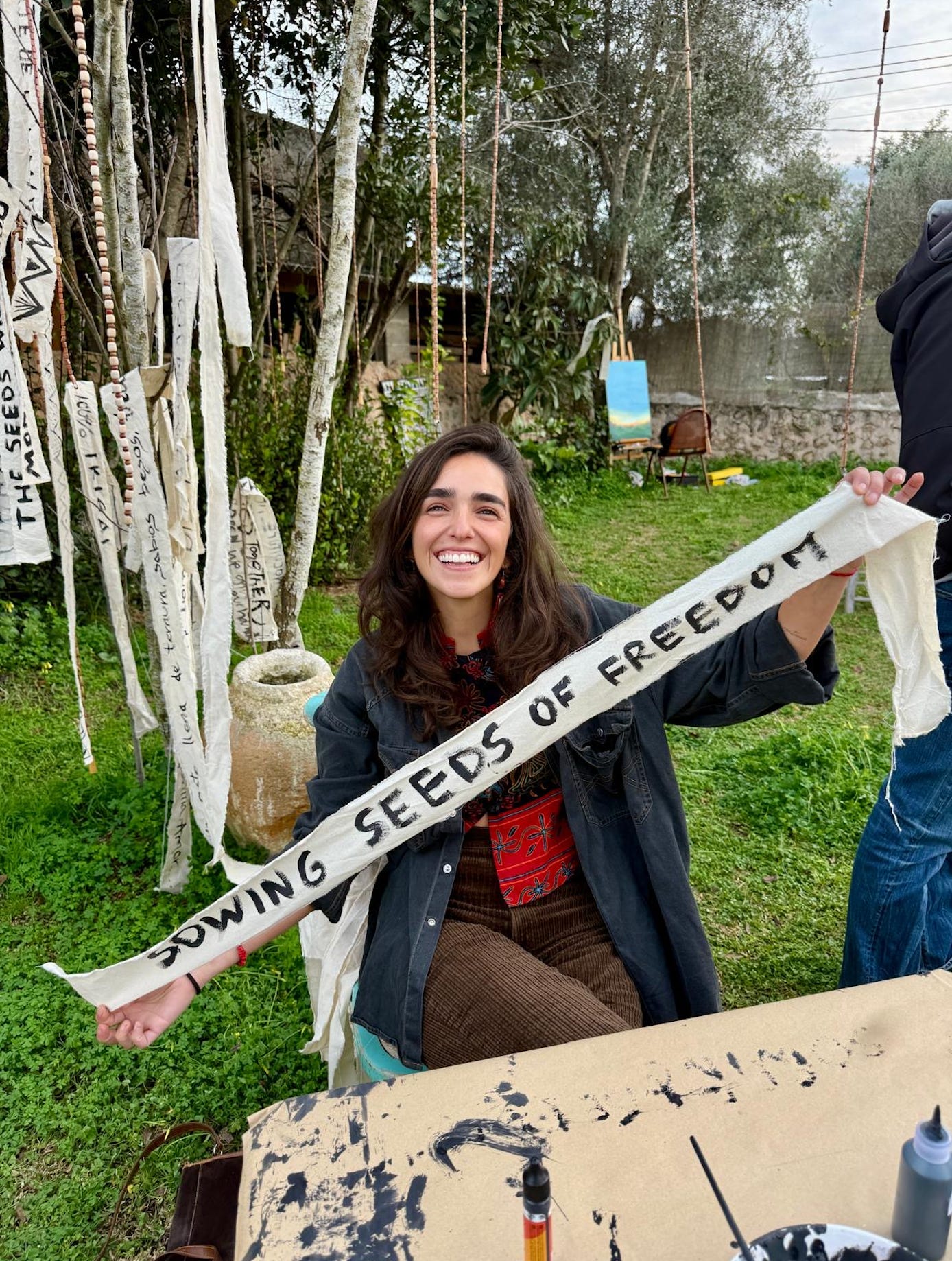
RD: That we can create systems that are both profitable and regenerative!
MA: What brings you joy?
RD: Spending an entire day farming and ending it exhausted while watching the sunset.
The smell of coffee in the morning.
Cooking for people.
Swimming in the sea before the day begins.
The hug of someone I love after a long day.
Lighting a candle at night.
Brazilian food and music.
Long conversations about philosophy and imagining different worlds.
Landing in my hometown and hearing the pilot say, “Bem-vindos ao Rio de Janeiro.”
Seeing my family after being away from them for so long.
MA: How do you release the fear or tension that comes from awareness of climate change? How do you lean into love?
RD: I release the fear of climate change by doing my part every day, dedicating my work to regenerative farming and caring for the soils around me. I try not to live in extremes, and I tend to be quite optimistic.
For me, leaning into love means engaging with the land and the community around me, and fully appreciating the nature that surrounds me each day. It means living as much as possible in alignment with my principles.
Thanks to Free the Ocean for the ongoing support.
I loved reading this :)
What a lovely way of looking at the world! Thank you Rachel and Mimi for such an uplifting and inspirational interview!